

What is the history of the iconic Chanel Logo
Few symbols in fashion are as instantly recognisable as Chanel’s iconic interlocking double C.
For over a century, this elegant monogram has represented the vision of Gabrielle “Coco” Chanel, becoming one of the most celebrated emblems of French luxury.
Yet behind its seemingly simple design lies a fascinating history of artistic inspiration, royal symbolism and even a legendary love story.
So where did the famous Chanel logo actually come from?
The Mysterious Origins of the Chanel Double-C Logo
The double-C monogram is associated with Gabrielle “Coco” Chanel, but the precise inspiration behind its design remains a subject of fascination.
Over the years, several theories have emerged, each offering a different glimpse into the extraordinary life of the woman behind the House of Chanel.
The Aubazine Abbey: A Childhood Inspiration
One of the most widely repeated theories traces the logo’s inspiration to Aubazine Abbey in France, where Gabrielle Chanel spent part of her childhood.
The abbey’s stained-glass windows feature geometric patterns that have often been compared to the interlocking Cs.
Some fashion historians believe these architectural details may have influenced Chanel’s distinctive monogram, although a direct connection has not been conclusively established.
Château de Crémat: An Elegant French Connection
Another theory leads us to the beautiful Château de Crémat, near Nice on the French Riviera.
The château has long been associated with a decorative double-C motif resembling the Chanel emblem.
According to this interpretation, Gabrielle Chanel may have encountered the design through her connections with the fashionable society of the Côte d’Azur.
Whether this was truly the inspiration remains uncertain, but the story adds another intriguing chapter to the logo’s history.
Coco Chanel and Arthur “Boy” Capel: A Romantic Theory
Perhaps the most romantic explanation connects the monogram to Arthur “Boy” Capel, the English businessman who played an important role in Gabrielle Chanel’s early career.
Capel supported her ambitions and helped finance her first ventures in fashion. Their relationship ended tragically with his death in 1919.
One theory suggests that the two interlocking Cs symbolise Chanel and Capel, forever united in a single emblem.
There is no definitive historical evidence confirming this interpretation, yet it remains one of the most captivating stories surrounding the famous logo.
A Symbol with Royal Connections
Interlocking C motifs also appeared in European royal decorative traditions, notably in the emblems associated with Catherine de’ Medici.
These historical similarities demonstrate that the use of intertwined initials existed long before the Chanel fashion house.
Whether Gabrielle Chanel drew inspiration from such royal symbolism is unknown.
What is certain is that she transformed the double C into an unmistakable signature of modern luxury.
How the Chanel Logo Became a Fashion Icon
The double-C monogram was already appearing in Chanel’s visual identity during the early 1920s, including on the famous Chanel N°5 perfume bottle.
Over the following decades, it evolved into a defining element of the House’s aesthetic.
Under Karl Lagerfeld’s creative direction, the interlocking CC became particularly prominent across Chanel handbags, jewellery, buttons and accessories.
Today, the logo appears in countless interpretations, from discreet gold-tone details to oversized statement hardware.
And perhaps nowhere is it more desirable than on the iconic Chanel Classic Flap handbag.
The Chanel CC Logo on Iconic Handbags
For Chanel lovers, the interlocking CC is more than a decorative detail. It is an essential part of the House’s design identity.
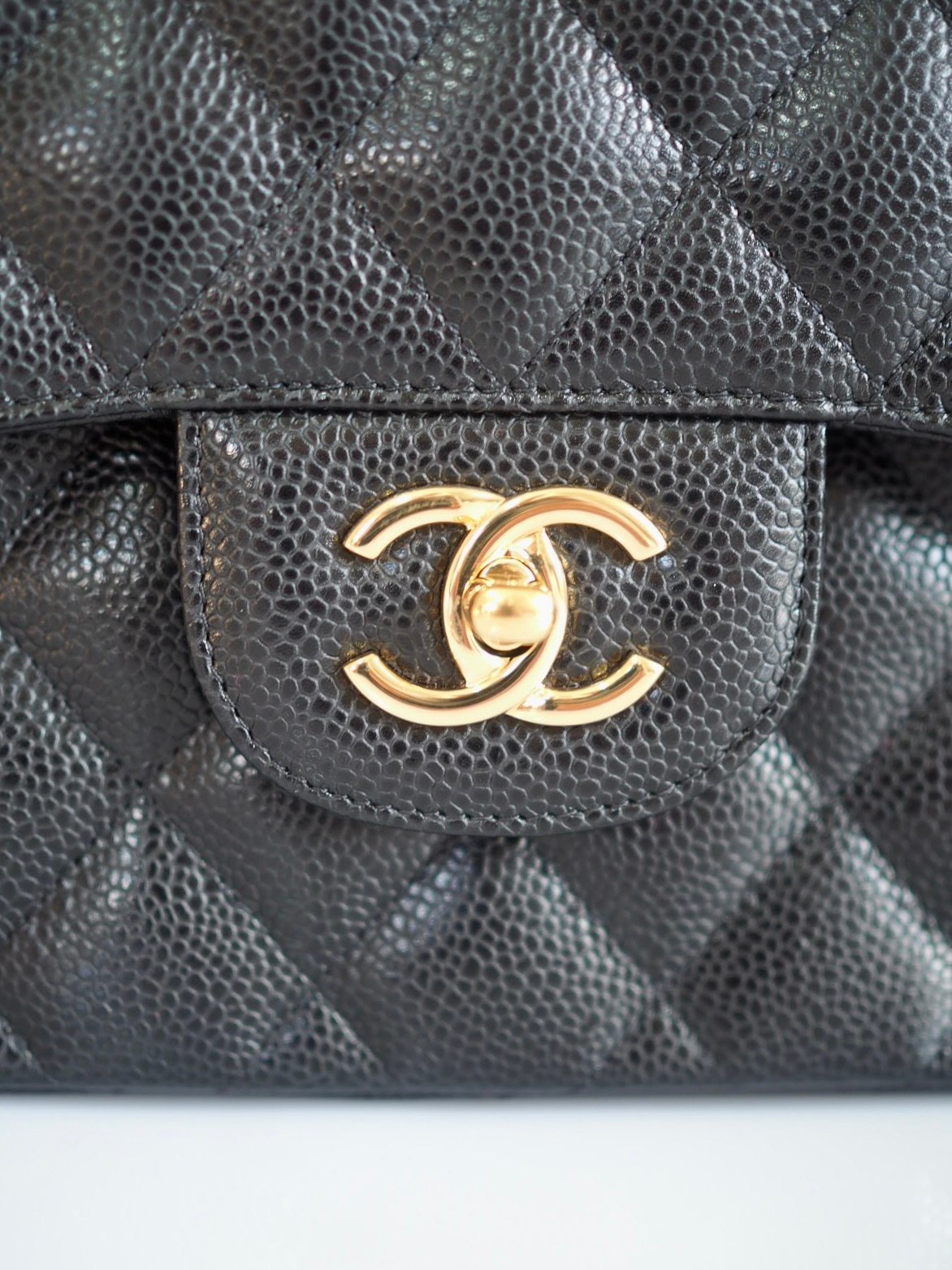


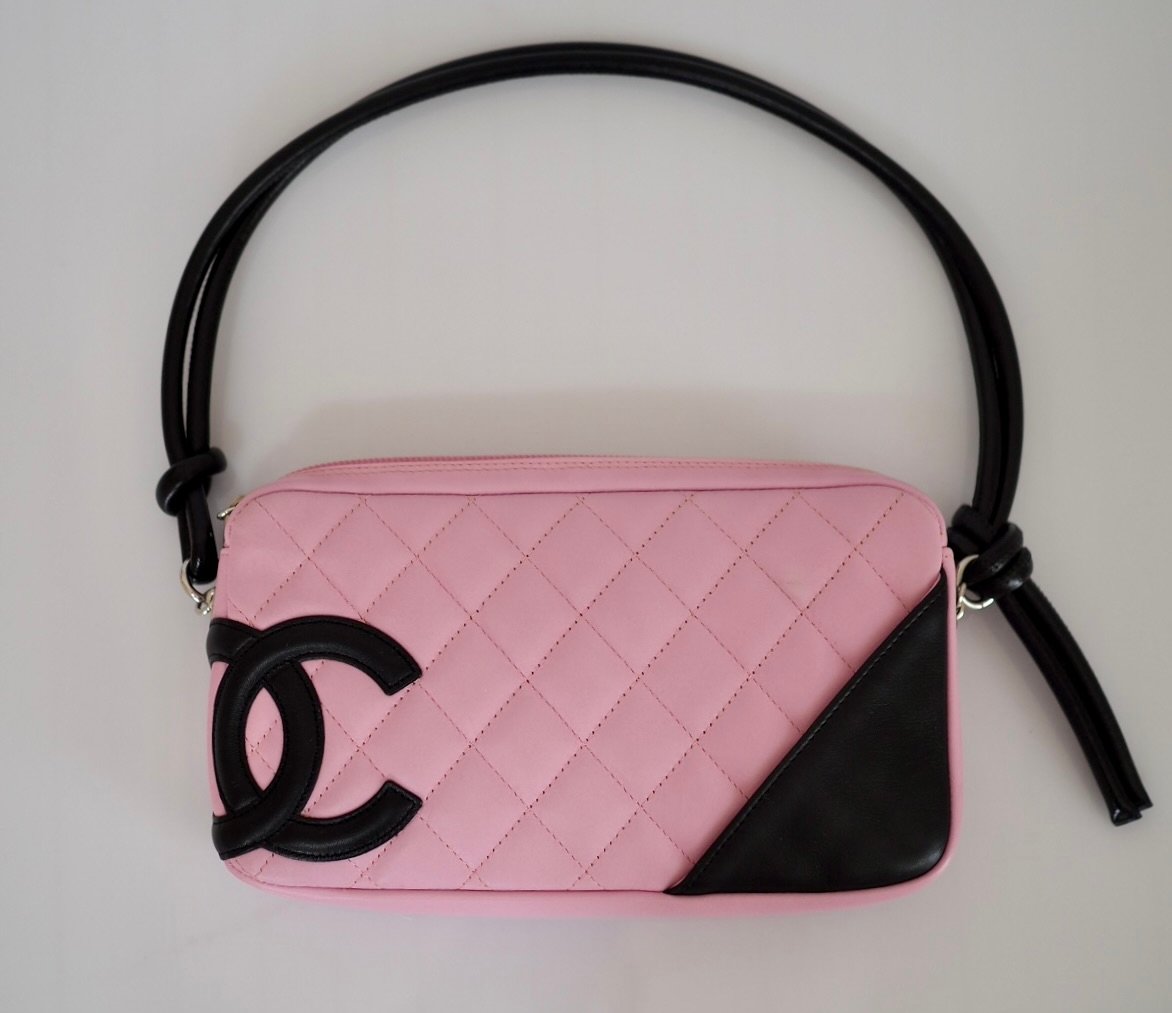
The Chanel Classic Flap, with its distinctive CC turnlock, remains one of the most recognisable examples.
Whether crafted in luxurious lambskin or textured caviar leather, the elegant clasp instantly identifies the bag’s signature aesthetic.
Interestingly, not every iconic Chanel handbag features the double-C closure.
The original Chanel 2.55, introduced in February 1955, is associated with the rectangular Mademoiselle lock, while the later Classic Flap became famous for its interlocking CC turnlock.
Two different interpretations of Chanel heritage, each with its own timeless appeal.
Discover the differences in our Chanel Classic Jumbo vs Reissue 2.55 comparison.
The Chanel Logo and Authenticity
One common misconception is that the Chanel logo alone can determine whether a handbag is authentic.
In reality, authentication involves examining several characteristics, including the craftsmanship, materials, stitching, hardware and construction.
The logo is an important detail, but it should always be considered as part of a broader assessment.
Learn more about our Authentication Process.
Discover the Timeless Appeal of Chanel at Vintage-United
From the unmistakable CC clasp of the Classic Flap to the beautifully detailed buttons of a vintage tweed jacket, the Chanel monogram continues to captivate generations of fashion lovers.
At Vintage-United, we celebrate this heritage through a carefully curated selection of authentic pre-owned Chanel handbags, ready-to-wear and accessories.
Each piece offers its own interpretation of the House’s enduring elegance. Inspired by the timeless legacy of Chanel?


